Simulating and adjusting
When to use
Use simulation when you want to know what a pay period will cost before creating a real run, for example after a policy change or when the CFO asks for an estimate. Use salary adjustments when one person’s pay must change with an audit trail.
Before you start
- Permissions:
payroll:readto simulate (it writes nothing);payroll:writeto raise adjustments;payroll:approveto approve them. - Toggle
people.payroll_adjustment_approval_required(default on): adjustments need approval before they take effect. - Toggle
people.salary_change_approval_required(default on): salary changes need approval.
Simulate before you commit
Go to Payroll → Payroll Simulation to preview the full run — gross, deductions, and net — without creating a live run, so you can catch surprises early.
Make individual adjustments
Go to Payroll → Salary Adjustments to change a specific employee’s pay mid-cycle (raise, correction, one-off) with a reason recorded for audit.
Re-simulate and confirm
Re-run the simulation after adjustments to confirm the totals before starting the live run.
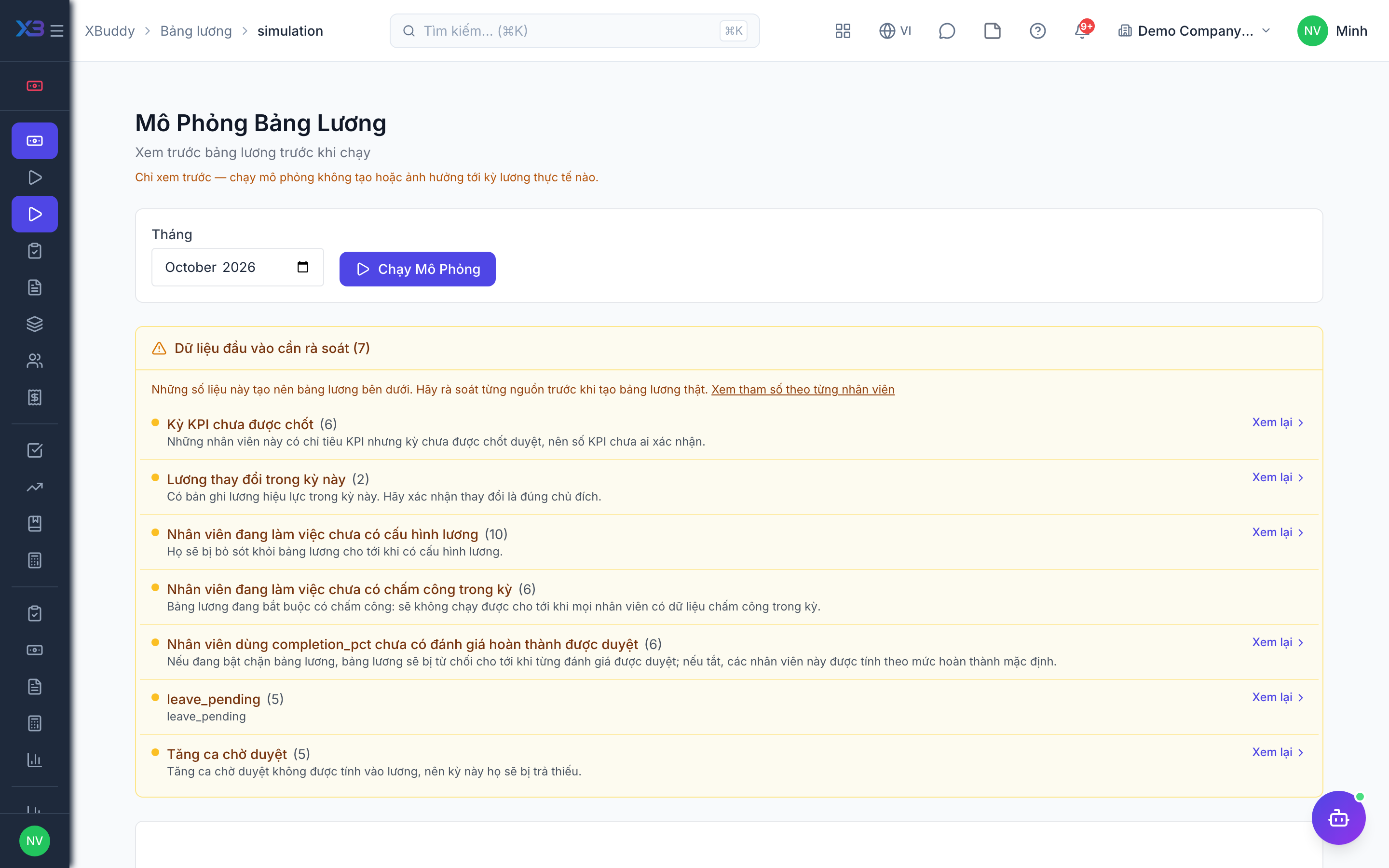
What simulation does and does not do
- It calculates gross pay, PIT, BHXH and net pay for the period as a preview, without writing a live run or posting to the GL.
- Line managers can review adjustment proposals on Payroll → Salary Adjustments (
/payroll/adjustments) before the period closes.
Tips & common mistakes
- Simulate before every large change, then compare against the previous period to spot outliers.
- Always enter a clear reason on an adjustment; it is what auditors will read.
- An adjustment after the period is finalised does not rewrite that period; use the correction paths instead.
- Merit increases proposed from Performance arrive as adjustment requests and follow the same approval.